
Dyslexia and Anxiety: Understanding the Connection
January 22, 2025An accessible breakdown of the key facts- Towards a Consensus for Dyslexia Practice: Findings of a Delphi Study on Assessment and Identification
February 27, 2025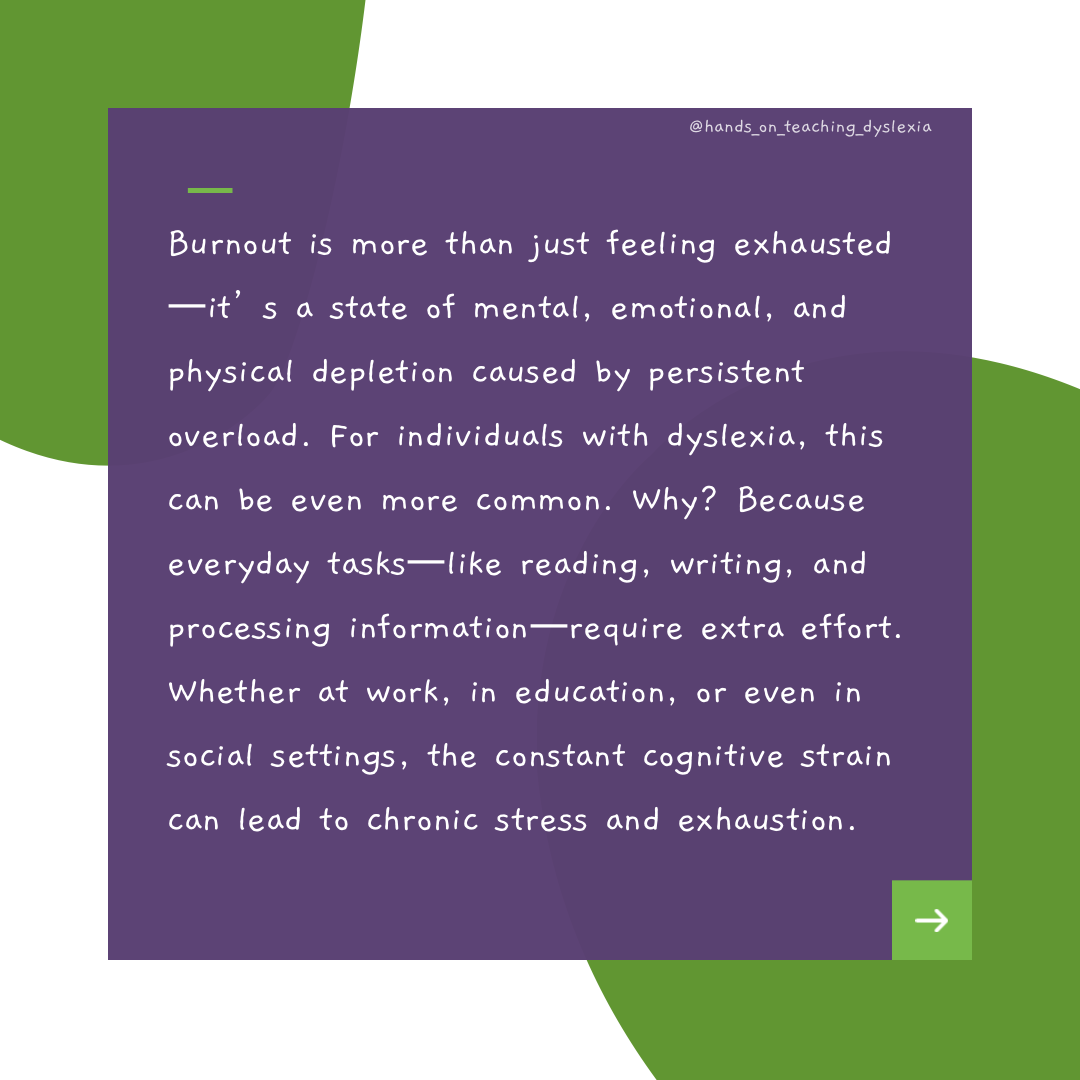
Burnout isn’t just about feeling tired or overwhelmed—it’s a serious state of mental, emotional, and physical exhaustion that can have lasting effects on well-being. While burnout can affect anyone, people with dyslexia may be more susceptible due to the additional cognitive load they often carry.
Many discussions around dyslexia focus on challenges with reading, writing, and processing information. However, what’s talked about far less is the impact these challenges can have on mental health and energy levels—particularly the risk of burnout.
Why are Dyslexic Individuals More Prone to Burnout?
Everyday tasks such as reading emails, taking notes, or processing written information can require significantly more effort for someone with dyslexia. What might take a few minutes for one person could take much longer for another, leading to a sense of falling behind or constantly working harder just to keep up.
This isn’t just limited to work or education—social interactions and daily life can also demand extra mental energy. Conversations, remembering details, and keeping up with fast-paced discussions can be more challenging, leading to a constant state of cognitive strain.
Without enough opportunities to switch off and recover, this ongoing effort can accumulate, leading to eventual burnout.
Signs of Burnout
Burnout doesn’t always happen suddenly—it builds up over time. Many people don’t realise they are experiencing it until it starts to affect multiple areas of their life. Some common signs include:
Constant exhaustion, no matter how much sleep is had.
Finding even small tasks overwhelming or impossible to start.
Increased procrastination and avoidance of responsibilities.
Heightened sensitivity to criticism or feedback.
Feeling detached, cynical, or uninterested in work or study.
Withdrawing from social situations or needing long recovery periods after socialising.
Reliance on caffeine, sugar, alcohol, or medication to relax.
Sleep disturbances—either struggling to sleep or sleeping excessively.
Craving quick-fix foods like chocolate, crisps, or high-carb snacks.
Difficulty concentrating, forgetfulness, or general brain fog.
Frequent headaches, digestive issues, or muscle tension.
Loss of interest in hobbies or feeling emotionally disconnected.
Burnout can also manifest as a loss of creativity or joy in activities that previously felt fulfilling. Over time, individuals may begin to feel numb, unmotivated, or stuck in survival mode.
How to Prevent & Recover from Burnout
Recognising burnout is the first step. It’s not just about being tired—it’s a sign that something needs to change. Here are some ways to prevent and recover from burnout:
1. Acknowledge It
Many people ignore the early signs of burnout, assuming exhaustion is just part of life. It’s not. Recognising the symptoms is crucial for making meaningful changes.
2. Work Smarter, Not Harder
For those with dyslexia, certain tools and strategies can ease the cognitive load. Assistive technology, such as text-to-speech software, audiobooks, or dictation tools, can make tasks more manageable. In education and the workplace, advocating for reasonable adjustments can also help create a more sustainable workload.
3. Take Regular Breaks
Breaks aren’t a luxury—they’re a necessity. Stepping away from work, even for short periods, helps to reset cognitive energy levels and prevent mental exhaustion.
4. Set Boundaries
Burnout often comes from overcommitting and lacking boundaries. Establishing clear limits around work, study, and personal time is essential for long-term well-being.
5. Prioritise Sleep & Nutrition
Lack of sleep can make burnout significantly worse. Creating a calming bedtime routine and avoiding screens before bed can help improve sleep quality. In addition, balanced nutrition—with fewer processed, high-sugar foods—supports brain function and energy levels.
6. Seek Support
Burnout is not something to manage alone. Speaking to friends, family, colleagues, or professionals can help identify solutions, whether through adjusting workload, exploring counselling, or simply getting emotional support.
Burnout is not a sign of failure—it’s a signal that something needs to change. For individuals with dyslexia, the extra effort required to navigate daily tasks can make burnout more likely, but with the right support, tools, and boundaries, it is possible to recover and prevent it from recurring.
Recognising the warning signs early and making adjustments can make a significant difference. Whether it’s implementing assistive strategies, taking breaks, or seeking support, prioritising mental well-being is just as important as academic or professional success.
