

Black Friday Week: Daily Deals for Dyslexia-Friendly Tools and Gifts
November 25, 2024
Burnout & Dyslexia: The Silent Struggle we Need to Talk About
February 4, 2025Dyslexia does not lead to an anxiety disorder, but the two can co-occur. Many individuals with dyslexia experience heightened stress and anxiety due to the challenges they face, which can affect their emotional well-being which will then have a subsequent impact on their educational attainment and enjoyment.
What is Stress?
Stress is the body and brain’s reaction to situations that feel threatening or overwhelming. It can be caused by:
- Physical threats, like avoiding danger (e.g., dodging a fastball).
- Psychological threats, like fear of making mistakes in public. This is something that learners with dyslexia will often experience.
Stress triggers the “fight, flight, or freeze” response:
- Good Stress: Helps us rise to challenges, enhancing focus and performance.
- Bad Stress: Occurs when we feel no control over the situation, leading to overwhelm or shutdown and can lead to school refusal.
What is Anxiety?
Anxiety is a state of worry or fear about what might happen. It can be:
- Situational: Triggered by specific challenges (e.g., reading aloud in class).
- Generalised: A constant sense of unease, not tied to a single event.
People with dyslexia may develop anxiety from repeated experiences of frustration, failure, or fear of judgment. Severe anxiety, like social anxiety disorder, can make social and academic settings particularly challenging.
Dyslexia and Stress
For individuals with dyslexia, tasks like reading, writing, or maths often feel daunting. Past successes can lead to positive/ good stress, fostering confidence. But repeated struggles can create negative/ bad stress, with the brain signaling:
“This is too hard—retreat!”
This can result in physical or mental “freezing,” where the individual feels paralysed by the challenge. The constant cycle of stress can erode self-esteem, making learning environments feel even more threatening.
Anxiety and Dyslexia
Anxiety for those with dyslexia often stems from fear of failure, ridicule, or embarrassment in social or academic settings. This anxiety can:
- Cause avoidance of tasks like reading aloud.
- Lead to social withdrawal or isolation.
- Erode self-confidence, creating a cycle of worry and avoidance.
Over time, unchecked anxiety can compound the challenges of dyslexia, impacting academic, social, and emotional growth.
So, what is the difference between anxiety and stress?
Anxiety is when we worry about what might happen, while stress is how we react to what is happening. Both can feel overwhelming, but they come from different causes.
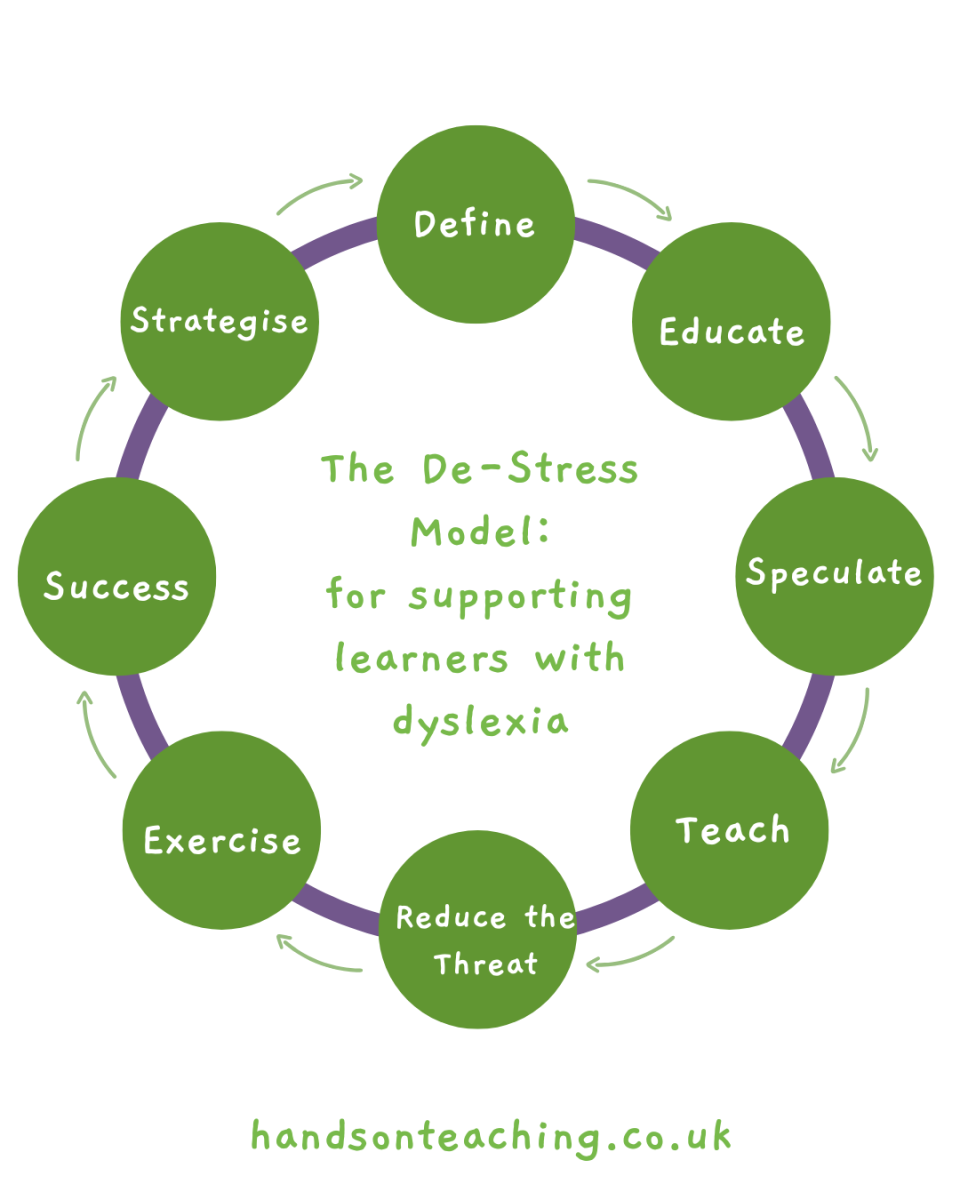
The DE-STRESS Model offers a roadmap to help individuals with dyslexia manage stress and anxiety:
- Define: Understand how dyslexia affects the individual. Every person experiences dyslexia differently, so it’s essential to analyse its specific impact.
- Educate: Teach the individual about their dyslexia and how it influences their learning and performance. Understanding reduces self-blame and builds empowerment.
- Speculate: Encourage the person to anticipate challenges and think about how they might address them. This helps develop a proactive mindset.
- Teach: Provide strategies for managing stress and anxiety, such as mindfulness, relaxation techniques, and problem-solving skills.
- Reduce the Threat: Create safe environments for learning and practicing new skills. Positive reinforcement is key.
- Exercise: Encourage regular physical activity, which has been shown to reduce stress and improve mental clarity.
- Success: Provide opportunities for the individual to experience mastery and success, replacing self-doubt with confidence.
- Strategise: Use what’s been learned to plan for future challenges. Building a roadmap for success creates a sense of control and preparedness.
When we feel stressed or anxious, the brain releases chemicals that help us deal with challenges. But if these feelings happen too often, they can become unhealthy. The brain also remembers negative experiences well, which can make it harder to break the cycle.
For children with challenges like dyslexia, anxiety and stress can be a constant struggle. They often worry about tasks like reading, writing, or maths. Ironically, as they improve, the work gets harder, creating a cycle that feels never-ending.
If you or someone you know may need further support with the emotional repercussions then I would highly recommend contacting Grooops who provide Dyslexia aware counselling, coaching, training & support.